Overview
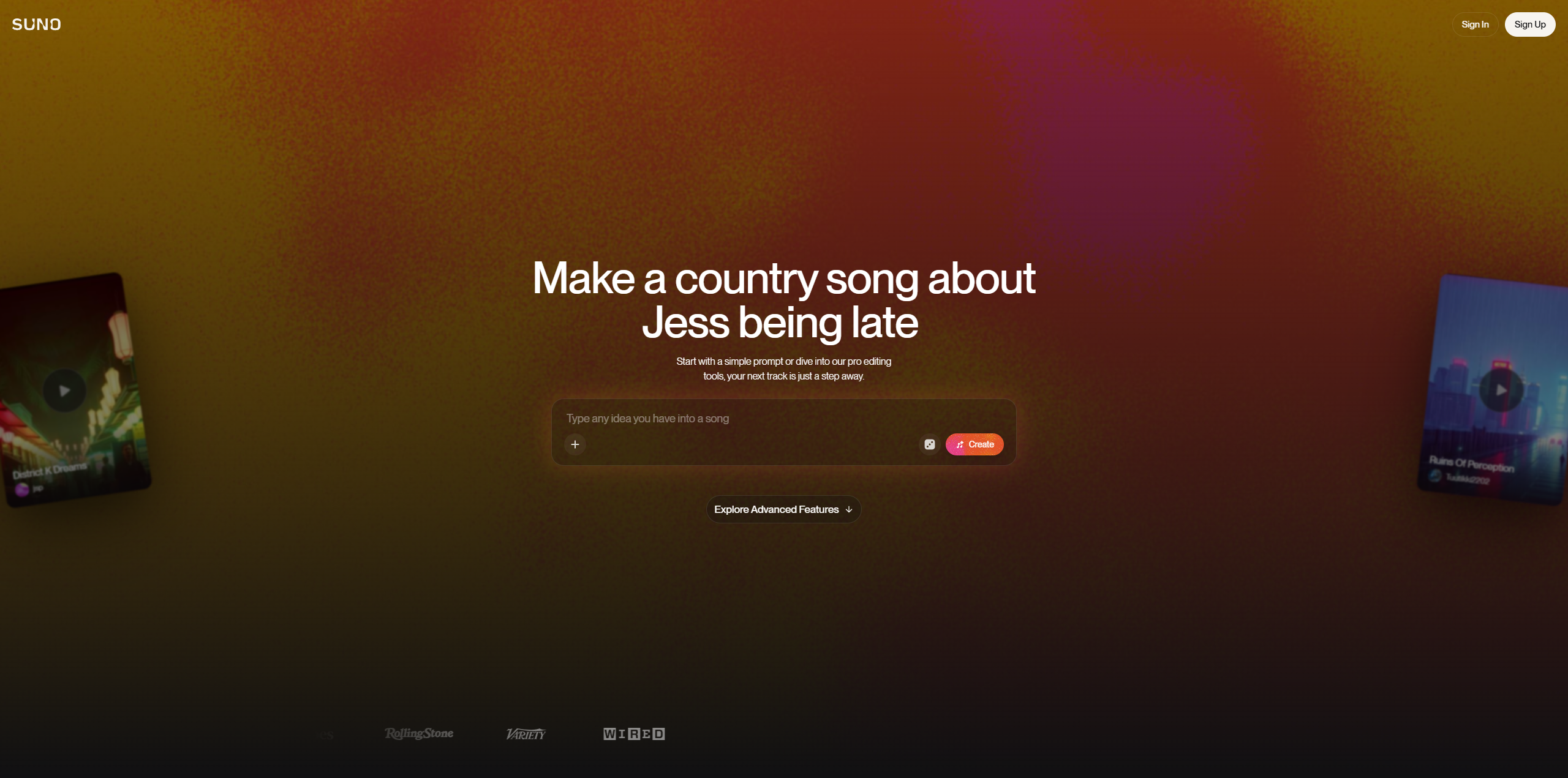
Suno has fundamentally changed the landscape of music creation, democratizing the ability to produce professional-sounding audio. Often described as the "ChatGPT for music," Suno allows users to generate full two-minute tracks from simple text prompts. Whether you want a "sad acoustic ballad about rain" or an "upbeat synth-pop track for a workout," Suno composes the melody, harmony, rhythm, and lyrics instantly. With the release of its latest Suno v5 model in late 2025, the platform has moved beyond novelty to become a serious tool for creators, offering fidelity that rivals studio recordings.
The magic of Suno lies in its deep learning architecture, which has been trained on a vast library of musical structures. unlike earlier MIDI-based generators, Suno renders raw audio, capturing the nuances of human breath, instrumental timbre, and emotional vocal delivery. This makes Suno a powerful ally for content creators, game developers, and aspiring songwriters who lack formal training. By removing the technical barriers of mixing and mastering, Suno lets users focus purely on the creative concept. As Suno continues to evolve with features like stem separation and advanced editing, it is rapidly becoming an essential piece of software in the modern creative stack.
Key Features
- Text-to-Song Generation (v5 Model): The core engine of Suno is its ability to translate text into audio. The v5 model creates songs with startling realism, handling complex genres like "Math Rock" or "Gregorian Chant" with ease. Suno generates two variations per prompt, allowing users to choose the best direction. The v5 update specifically improved the clarity of vocals, ensuring that Suno lyrics are intelligible even in heavy metal or mumble rap genres.
- Suno Personas: One of the most requested features, "Personas," allows Suno users to save a specific vocal character. If Suno generates a voice you love, you can lock that "Persona" and use it across multiple songs. This is a game-changer for creating virtual artists or concept albums, as it ensures the "singer" remains consistent from track to track within the Suno ecosystem.
- Audio Input & Covers: Suno is not limited to text; it can also listen. Users can tap a rhythm or sing a melody into their phone, and Suno will use that audio as the seed for a new song. Additionally, the "Cover" feature lets users take a song they created and completely reimagine it. You can ask Suno to turn your "Country" song into a "K-Pop" hit while keeping the original melody and lyrics intact.
- Stem Separation: For professional producers, Suno offers stem separation on paid plans. This means you can download the vocals, drums, bass, and instruments of a Suno track separately. This allows creators to drag Suno assets into a DAW (Digital Audio Workstation) like Ableton or Logic Pro for final mixing, bridging the gap between AI generation and manual production.
Use Cases
- For Content Creators: YouTubers and TikTok streamers use Suno to generate royalty-free background music that perfectly matches the duration and mood of their videos. Instead of searching stock libraries for hours, they let Suno compose a custom track in seconds.
- For Songwriters: Musicians use Suno as an "infinite idea generator." If a songwriter is stuck on a chorus, they can feed their lyrics into Suno to hear five different melodic possibilities, breaking writer's block instantly.
- For Roleplayers (D&D): Dungeon Masters use Suno to create immersive soundtracks for their campaigns. They can generate a "bard's song about the dragon slayer" to play during a session, adding a unique layer of immersion that generic playlists cannot match.
Pricing Plans
Suno operates on a credit-based subscription model, ensuring there is a plan for every level of user.
The Free Plan is generous but restricted. It gives users 50 credits per day (enough for roughly 10 songs). However, users on the free tier of Suno do not own the commercial rights to the music they generate; it is for personal use only. Additionally, free users cannot use the advanced stem separation features.
The Pro Plan ($10/month) is the sweet spot for most creators. It provides 2,500 credits per month (approx. 500 songs) and, crucially, grants commercial ownership of the tracks. This means you can upload your Suno songs to Spotify, Apple Music, or YouTube and monetize them. Pro users also get access to the priority generation queue, ensuring Suno renders their songs faster during peak hours.
The Premier Plan ($30/month) is designed for power users and agencies. It offers 10,000 credits per month (2,000 songs) and enables concurrent generations. Premier subscribers often get early access to new Suno features (like v5 alpha tests) before the general public.
Pros & Cons
Pros
- Suno produces the most realistic human vocals of any AI music tool currently on the market.
- The interface is incredibly intuitive; a complete novice can make a great-sounding song on Suno in under a minute.
- Suno offers true commercial ownership on paid plans, allowing users to build a legitimate business around their AI music.
- The "Personas" feature solves the issue of random voices, allowing for consistent storytelling.
- Suno works seamlessly on mobile browsers, making it easy to create on the go.
Cons
- Despite improvements, Suno tracks can still suffer from "audio hallucinations," where the AI ignores the prompt or mumbles the end of a song.
- The audio fidelity of Suno, while high, is not yet at the standard of a professionally mastered 24-bit studio file (often limited to 48kHz mp3/wav).
- Suno has strict content filters that may block prompts containing mild violence or "NSFW" themes, which can be frustrating for storytelling genres.
- Copyright laws regarding AI music are still evolving, and while Suno grants rights, the legal landscape remains complex.