Overview
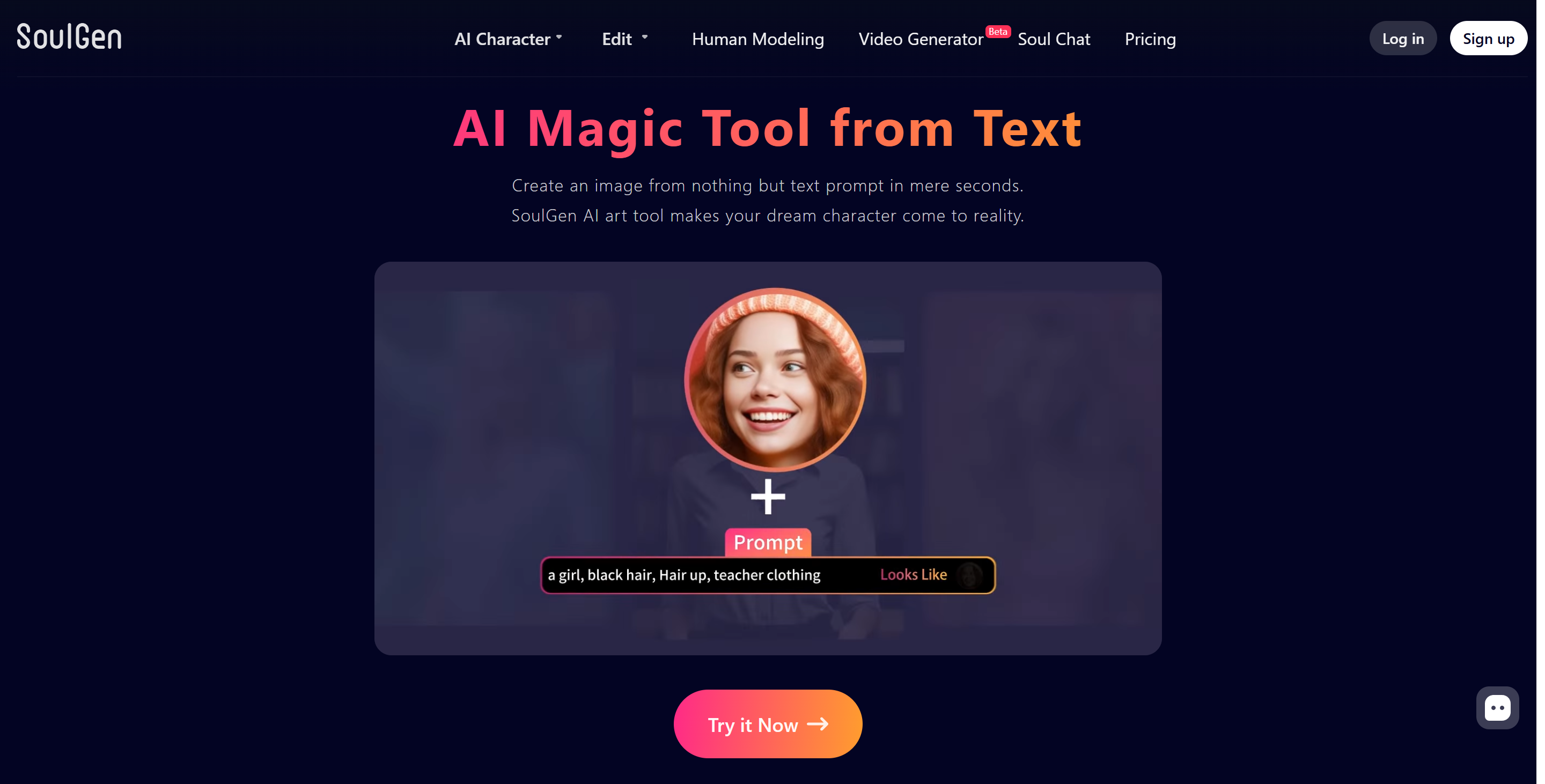
SoulGen occupies a unique niche in the generative AI landscape. While tools like Midjourney or DALL-E 3 aim to be "everything engines"—capable of generating landscapes, logos, and surreal art—SoulGen is laser-focused on one thing: generating attractive, customized human characters. Often marketed as a "soulmate generator," SoulGen allows users to input simple text prompts to create highly detailed images of realistic people or anime characters. It eliminates the complexity of "prompt engineering" required by other tools, making it accessible to anyone who wants to visualize a specific character concept instantly.
Beyond static image generation, SoulGen distinguishes itself with its "Soul Chat" feature. This transforms the platform from a simple art tool into an interactive experience. Once you generate a character, you can engage in a conversation with them, powered by an underlying Large Language Model (LLM). This fusion of visual generation and conversational AI makes SoulGen a popular choice for users looking for immersion, roleplay, or simply the ability to bring their "dream character" to life. Whether you are an anime enthusiast, a digital artist, or a storyteller, SoulGen offers a streamlined, user-friendly bridge between your imagination and the screen.
Key Features
-
Dual-Style Text-to-Image: SoulGen simplifies the creative process by offering two distinct generation modes: "Real World" and "Anime." The "Real World" mode produces photorealistic portraits with impressive skin texture and lighting, while the "Anime" mode leans into the stylized aesthetics of Japanese animation and manga. This binary choice ensures that SoulGen understands the desired art style immediately without needing complex style descriptors in the prompt.
-
Soul Chat: This is the platform's standout feature. SoulGen allows users to "chat" with the characters they create. The AI generates a persona based on the visual appearance and user input, allowing for dynamic, roleplay-style conversations. This adds a layer of depth to the artwork, as users can build a narrative or relationship with their generated character, rather than just viewing a static image.
-
Lookalike (Face Reference): SoulGen includes a "Lookalike" feature that allows users to upload a reference photo. The AI analyzes the facial features of the uploaded image and attempts to generate a new character that shares those traits. This is particularly useful for creating "fan art" of real celebrities or visualizing how a specific person might look in a different artistic style or setting.
-
Edit & Inpainting Tools: SoulGen is not just about "one-shot" generation; it provides tools to fix mistakes. Users can use the "Edit" feature to modify specific parts of an image. If SoulGen generates a character with the wrong hair color or a strange background, you can highlight that area and type a new prompt (e.g., "change hair to red" or "add a beach background"), giving you granular control over the final output.
Use Cases
-
For Anime & Manga Fans: SoulGen is a haven for "Otaku" culture. Fans use the tool to generate high-quality "waifus" or "husbandos" based on specific tropes or character descriptions. It allows them to visualize fan fiction characters or create wallpapers of their ideal anime archetypes without needing drawing skills.
-
For Creative Writers & Roleplayers: Storytellers use SoulGen to visualize their Original Characters (OCs). By generating a concrete image of a protagonist, writers can better describe them in their text. The "Soul Chat" feature also helps roleplayers test out character dialogues and personalities in a simulated environment.
-
For Virtual Influencer Creators: As the "AI Influencer" trend grows on Instagram and TikTok, creators use SoulGen to generate consistent, realistic-looking models. Because SoulGen excels at maintaining facial consistency relative to generalist tools, it helps in building a portfolio of images for a virtual persona.
Pricing Plans
SoulGen operates on a subscription-based model, which is necessary to unlock the high-quality, unblurred images that the platform is known for.
The Free Version of SoulGen functions largely as a demo. Users can generate images to see the composition and adherence to the prompt, but the results are often heavily blurred or watermarked, and advanced features like "Soul Chat" are restricted. This tier is best for testing the interface to see if SoulGen can understand your prompts.
The Pro Plan is where the platform becomes truly usable. Typically priced around $9.99 per month (or significantly less if billed yearly, often around $69.99), the Pro subscription unlocks "HD" generation, removing all blur and watermarks. Pro users also get a monthly allowance of credits, priority generation (skipping the queue), and the ability to generate multiple variations at once ("Multitask"). Furthermore, the paid plan unlocks full access to SoulGen's chat features and "Edit" capabilities, allowing for unlimited creative freedom.
Pros & Cons
Pros
- SoulGen is incredibly easy to use, requiring far less complex prompting than Stable Diffusion or Midjourney to get good character results.
- The "Lookalike" feature effectively blends uploaded photos with AI generation, which is difficult to achieve on other platforms without technical setups.
- SoulGen produces highly aesthetic and attractive characters by default, as the model is fine-tuned for beauty.
- The integration of "Soul Chat" offers a unique entertainment value that goes beyond simple image generation.
- SoulGen allows for "Edit/Inpainting," enabling users to fix small details without regenerating the entire image.
Cons
- SoulGen is highly specialized; it struggles to create complex non-human subjects like logos, intricate landscapes, or architectural designs.
- The "Free" version is very restrictive, essentially forcing a subscription if you want to see your results clearly.
- SoulGen relies on a credit system even for some paid tasks (like high-res upscaling), which can feel like "double-dipping" on costs.
- The focus on "attractive characters" can sometimes limit the diversity of the output, making it harder to generate gritty, older, or unconventional looking characters.