Overview
ShipFast has gained cult status among indie hackers and solopreneurs as the go-to "cheat sheet" for launching startups. Created by the prolific developer Marc Lou, ShipFast is not just a software library; it is a philosophy that prioritizes speed of execution over perfectionism. In the competitive world of SaaS (Software as a Service), the time it takes to go from idea to first revenue is critical. ShipFast solves the "blank canvas" paralysis by providing a production-ready NextJS boilerplate that already handles the boring, repetitive parts of web development.
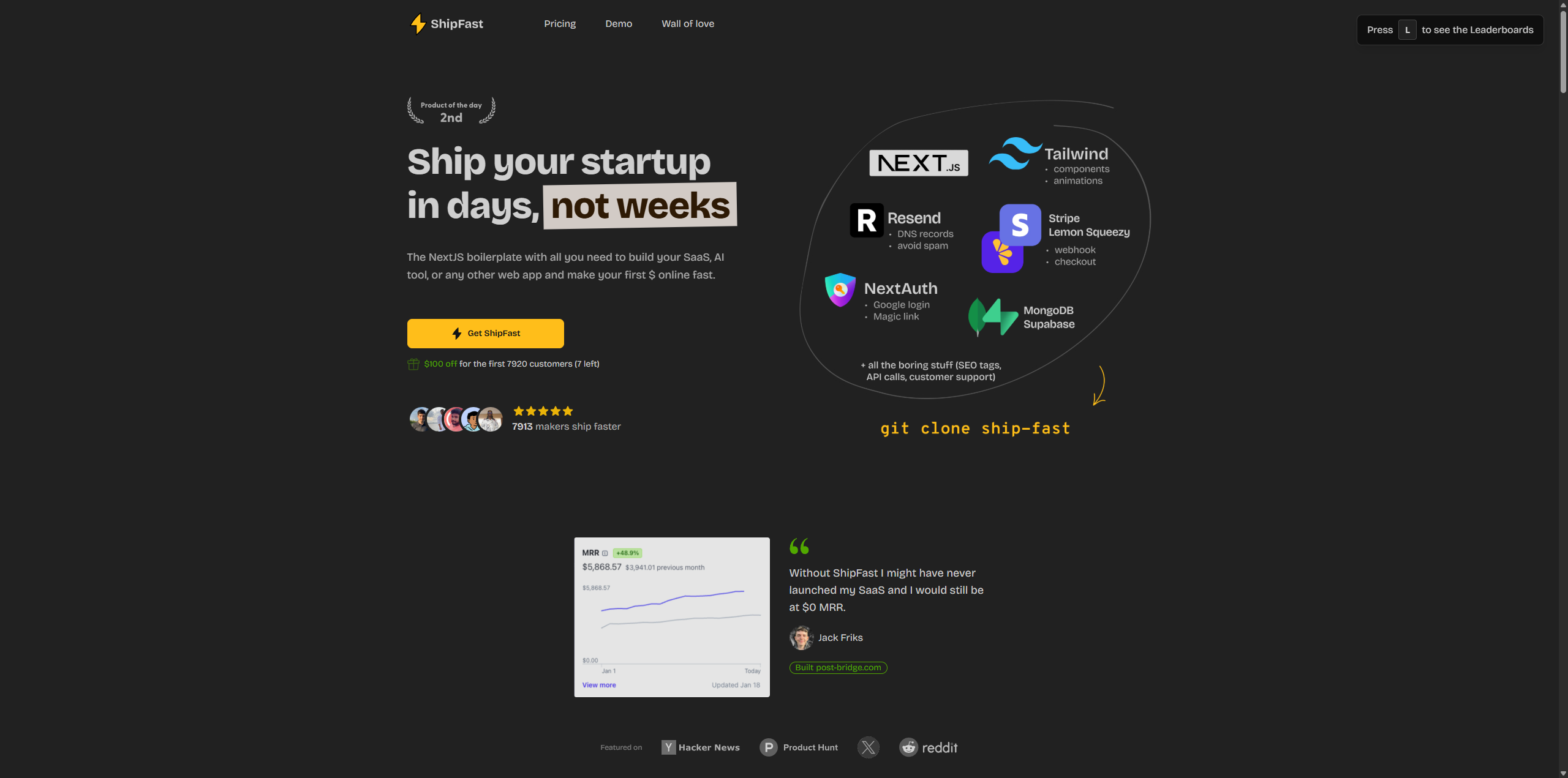
Instead of spending weeks configuring OAuth logins, setting up Stripe webhooks, or wrestling with email server DNS records, ShipFast users clone a repository that works out of the box. It integrates modern, high-speed technologies like Next.js, Tailwind CSS, and Supabase into a cohesive package. Whether you are building an AI tool, a directory, or a subscription service, ShipFast provides the skeleton so you can focus solely on the muscle—your unique product logic. By reducing the technical barrier to entry, ShipFast has empowered thousands of non-experts to deploy profitable applications, making it a cornerstone tool in the "build in public" community.
Key Features
-
Plug-and-Play Authentication: ShipFast comes with fully configured user authentication. It supports "Magic Links" and social logins (Google, GitHub) via NextAuth (Auth.js). This means you don't have to write complex security logic; users can sign up and log in securely from the moment you deploy the code.
-
Pre-Built Payment Integrations: Monetization is often the hardest part of coding a startup. ShipFast includes ready-to-use code for Stripe and Lemon Squeezy. It handles the complex logic of webhooks—automatically updating user access when a subscription is paid, cancelled, or renewed—so you can start charging users on Day 1.
-
SEO & Blog System: Traffic is the lifeblood of any new product. ShipFast is optimized for Google rankings right out of the box. It includes a complete blog markdown system, meta tags, and OpenGraph configurations. This allows ShipFast users to write content immediately and rank for keywords without needing to install a separate CMS (Content Management System).
-
Email & Marketing Tools: Communication is key for retention. ShipFast integrates with services like Mailgun and Resend to send transactional emails (like "Welcome" messages or "Reset Password" links). It also includes pre-designed UI components for collecting emails on a waitlist, helping ShipFast users build an audience before they even launch.
Use Cases
-
For Indie Hackers: ShipFast is the "Swiss Army Knife" for developers who work alone. If you have a weekend to build an MVP (Minimum Viable Product), ShipFast removes 80% of the setup work, allowing you to validate your business idea before the weekend is over.
-
For AI Wrappers: With the rise of AI, many developers want to build simple interfaces around OpenAI or Claude APIs. ShipFast is ideal for this, as it provides the frontend UI and backend API routes needed to connect to LLMs and charge users for credit usage immediately.
-
For Freelancers: Web developers often use ShipFast to deliver client projects faster. Instead of billing clients for weeks of setup, they use ShipFast to jumpstart the project and focus the budget on custom features, increasing their profit margins and client satisfaction.
Pricing Plans
ShipFast differentiates itself from many SaaS tools by offering a one-time payment model rather than a recurring subscription. This "pay once, own forever" approach is highly attractive to developers.
The Starter package (typically around $169) provides the full NextJS boilerplate, including the code for payments, authentication, and database connections. This version gives you lifetime access to the GitHub repository and all standard updates.
The All-In package (typically around $199) is the most popular tier. In addition to the code, it grants access to the ShipFast Discord community, where thousands of makers share tips and debug each other's code. It also includes exclusive "leaderboard" features and discounts for other developer tools worth hundreds of dollars. For a developer serious about launching multiple projects, the small price difference makes the All-In version of ShipFast the better value.
Note: ShipFast does not offer a free tier or refunds, as the product is open-source code that cannot be "returned" once downloaded.
Pros & Cons
Pros
- ShipFast drastically reduces development time, allowing users to ship products in days.
- The one-time fee provides lifetime access to the code, which can be reused for unlimited projects.
- The tech stack (Next.js, Tailwind, Supabase) is modern, popular, and widely supported by the industry.
- ShipFast includes excellent documentation and tutorials that are easy enough for beginners to follow.
- The community aspect offers networking opportunities with other successful entrepreneurs.
Cons
- ShipFast is an "opinionated" boilerplate; if you don't like Tailwind CSS or NextAuth, stripping them out can be difficult.
- As the code is downloaded locally, ShipFast requires manual git pulls to get updates, unlike a cloud SaaS that updates automatically.
- There is no free trial or refund policy, requiring a leap of faith before purchase.
- Advanced enterprise developers may find the code structure of ShipFast too simple or "messy" compared to strict corporate standards.